The AI Features in Your Data Room That Matter — and the Ones That Are Wallpaper
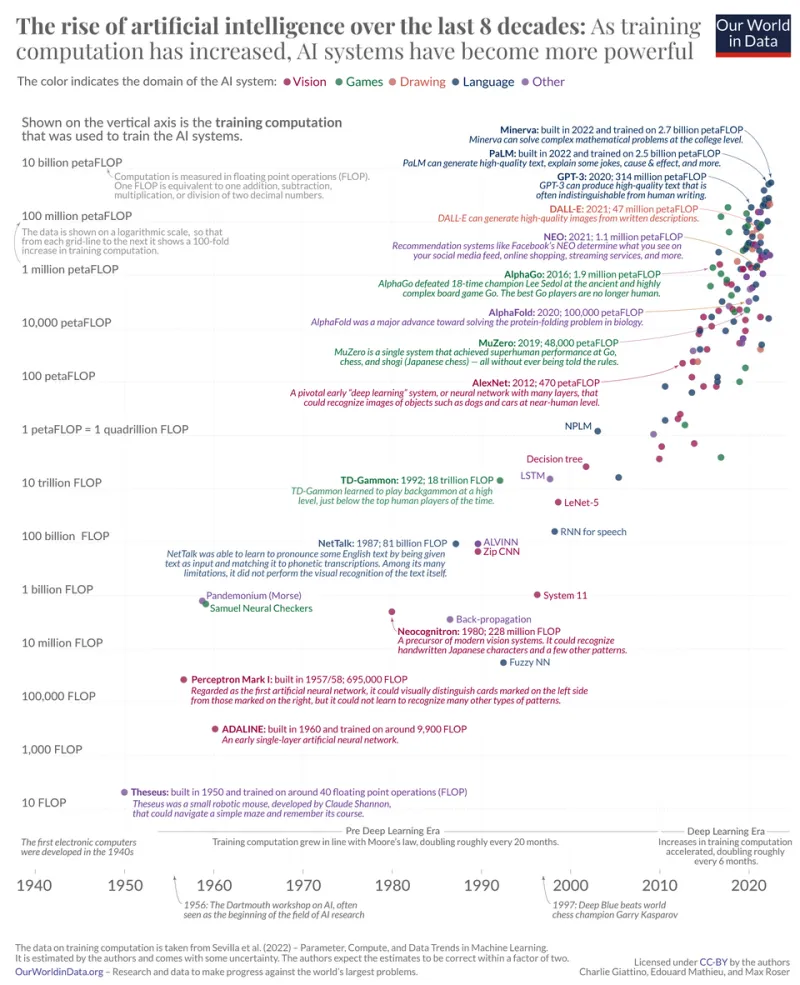
Photo: Our World in Data, CC BY 4.0, via Wikimedia Commons
There was a time when "secure" and "cloud-based" were the load-bearing words in every data room vendor's pitch. Those have been retired. In 2025, the word doing the heavy lifting is AI — attached to redaction, to Q&A routing, to document summarization, to risk scoring, and occasionally, it seems, to the vendor's coffee machine.
Deal teams should not dismiss this wave. But neither should they pay a premium for it uncritically. Having watched several of these tools in live transactions, we would draw the line as follows.
Genuinely Useful: Machine-Assisted Redaction
Redaction has always been the most tedious, error-prone task in deal preparation — and the consequences of missing a single Social Security number or bank account in a released document are severe. Modern models that detect and mask PII across large document sets, with human review on flagged items, deliver a real reduction in both effort and risk. This is not glamorous, but it is the AI feature most likely to justify its line item. The caveat: treat the machine as a first pass, never the final gate. Several vendors overstate accuracy rates on scanned, low-quality documents.
Genuinely Useful: Q&A Triage at Scale
In a competitive process with multiple bidders, buyer questions arrive in the hundreds. Auto-routing that classifies questions, detects duplicates across bidder groups, and directs them to the right internal owner can compress response cycles from days to hours. For sellers running parallel processes, that speed is a competitive asset. For a two-bidder deal, it is a convenience.
The Middle Ground: Document Summarization
Auto-generated summaries of long agreements are genuinely helpful for triage — a partner can decide which of forty NDAs deserves attorney attention. They are not helpful as diligence substitutes. We have reviewed summaries that flattened material carve-outs into reassuring generalities. Summarize to prioritize; never summarize to decide.
Mostly Wallpaper: "AI-Powered" Search and Analytics
Much of what is marketed as intelligent search remains semantic keyword matching with better marketing. Similarly, several "AI insights" dashboards are repackaged access logs — the underlying behavioral signals are valuable, as we have argued before, but the machine learning layer adds little. Ask the vendor what specific model architecture drives the feature and what accuracy they will warrant in writing. Vague answers are informative.
An Evaluation Checklist for Legal and Deal Teams
- Does the feature perform a task you currently pay humans to do, at meaningful volume?
- Will the vendor commit to measurable accuracy thresholds, especially for redaction?
- Where does the data processed by the model reside, and is it used for vendor training? For deal documents, the answer must be no.
- Can the feature be disabled without degrading core room functionality?
AI in the data room is arriving, and some of it is worth paying for. The discipline lies in buying capabilities, not vocabulary.